Makio: A Friendly, Bold Sans Serif Font for Handmade Creators
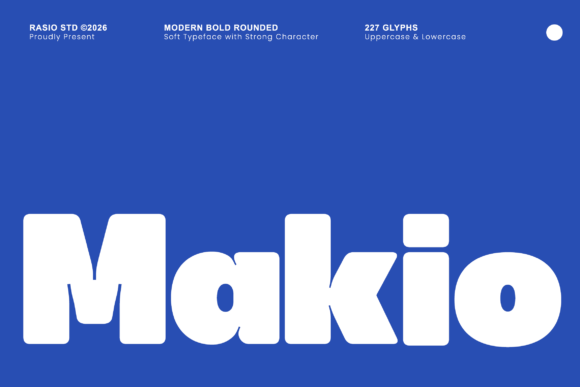
As someone who designs printable wall art, cuts vinyl stickers for boutique shops, and hand-presses greeting cards for local markets, I know how much a font can quietly shape how customers see—and feel about—my work. That’s why Makio stands out in my font library: it’s not just bold or rounded—it’s inviting. A modern sans serif font with generous curves, soft corners, and confident weight, Makio delivers presence without intimidation. It feels like a warm handshake on a product label, a cheerful “hello” on a wedding welcome board, or a grounded, trustworthy voice on artisanal candle packaging.
I reach for Makio when I need a display font that holds up beautifully at any size—from tiny 8pt ingredient labels on soap tags to oversized 200pt quotes on farmhouse-style wall prints. Its rounded terminals and open counters keep letters legible even when cut small on Cricut or Silhouette machines. No awkward gaps, no cramped spacing, no guesswork when scaling down for sticker sheets or planner inserts. And because it’s a true sans serif font designed for clarity, it renders crisply in PDF templates, SVG files, and PNG mockups—no fuzzy edges, no rendering surprises on print-on-demand platforms.
For physical product makers, Makio shines where personality meets practicality. Think of a lavender-scented candle line: pairing Makio’s bold, friendly letterforms with a clean script font for the scent name (“Lavender & Linen”) creates instant visual hierarchy and emotional resonance. Or imagine holiday gift tags—Makio handles “Handmade with Love” with sincerity and charm, while remaining easy to read at a glance. Wedding stationery designers love it for signage (“Welcome,” “Dinner Is Served,” “Mr. & Mrs.”) because it balances elegance and approachability—no stiff formality, no cutesy exaggeration.
It’s also ideal for digital printables that sell well on Etsy: quote pages, affirmation cards, habit trackers, and minimalist wall art. Makio’s consistent stroke weight and balanced proportions mean your text stays centered, aligned, and visually stable—even across dozens of pages in a planner bundle. When customers download your file and print it at home, they get the same polished look you previewed. No distortion. No thinning. Just reliable, joyful typography.
What makes Makio especially useful for commercial crafters is its versatility in pairing. Try it with a relaxed handwritten font for invitations (Makio for headings, script for names and details), or layer it over a light serif font for product packaging—say, Makio for “Small Batch Roasted Coffee” above a delicate serif for origin notes and tasting profile. It grounds expressive fonts without competing, and lifts minimal layouts without overwhelming them. As a standalone typeface, it works beautifully for logo design, shop banners, and social media graphics—especially when you want modern typography that feels human, not robotic.
Readability matters most when your font lives on real-world objects. I’ve used Makio for laser-cut wooden signs, heat-pressed tote bags, and foil-stamped business cards—and every time, it retained its warmth and clarity. The rounded geometry helps prevent chipping or bleeding during printing and cutting, and its generous x-height ensures lowercase letters remain distinct, even on textured paper or matte vinyl. For seasonal crafts—think Halloween treat bags, Easter egg labels, or Christmas ornament tags—Makio adds cheer without looking childish, thanks to its mature structure and subtle confidence.
Before downloading, check what’s included: Makio typically offers multiple weights (Light, Regular, Bold, ExtraBold), true italics, and often stylistic alternates or ligatures—useful for avoiding awkward letter collisions in words like “coffee” or “bouquet.” If your shop serves international customers, verify multilingual support (like extended Latin characters or diacritics) so your bilingual baby shower invites or French bakery labels stay accurate and professional. File formats usually include OTF and TTF—both compatible with Canva, Adobe Creative Cloud, Cricut Design Space, and Silhouette Studio.
One non-negotiable for sellers: always confirm the commercial license. Makio is a premium font built for creators—not just personal use. With the proper license, you’re covered to use it in physical products (stickers, mugs, apparel), digital downloads (printables, templates, SVG bundles), client work, and even resale items like editable Canva templates. Just avoid embedding it directly into apps or reselling the font files themselves—that’s standard across reputable commercial fonts.
In my studio, Makio has become the go-to for projects where I want clarity, kindness, and quiet authority—all in one typeface. It doesn’t shout. It connects. Whether you’re designing a boutique clothing tag, a wedding menu, a printable kids’ activity sheet, or a rustic coffee shop chalkboard sign, Makio brings consistency to your brand identity without sacrificing individuality. It’s proof that strong typography doesn’t have to be severe—and friendly design doesn’t have to sacrifice strength.
If you’ve been searching for a sans serif font that feels both handmade and highly capable—something that looks as good on a laser-cut wood sign as it does on a digital planner page—Makio isn’t just another option. It’s the one you’ll open first, use most, and hear customers compliment by name.